Project Search
No Results Found
Search Results - Blog
Search Results - FAQs
No Results Found
No Result Found
The Journal - 26th May 2026
Why Mixed-Use Communities Outperform Single-Use Developments in Dubai
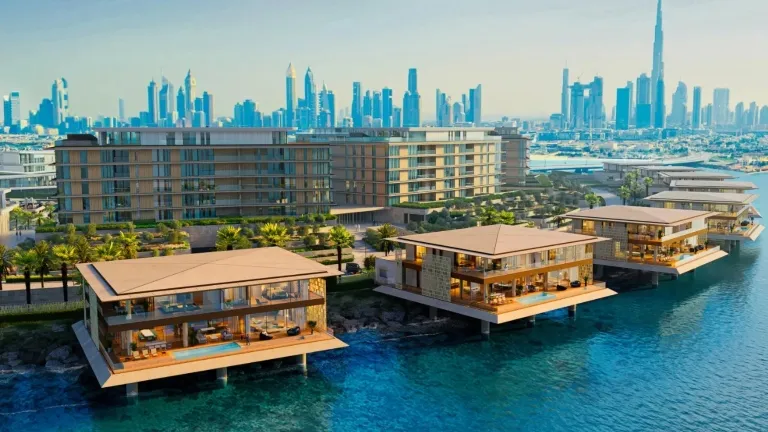
<img loading="lazy" src="/sites/default/files/2026-08/768x432_7.jpg" width="768" height="432" alt="Why Mixed-Use Communities Outperform Single-Use Developments in Dubai" />
<p>Dubai’s property market is entering a more selective phase, where long-term performance is shaped less by scale alone and more by how effectively a community supports daily living patterns, mobility, social connection, and investment resilience. For buyers assessing Dubai property investment, mixed-use communities present a more compelling, risk-adjusted value proposition because they bring residential, retail, hospitality, leisure, and public spaces into one connected environment.</p>
<p>Demand is no longer driven by one audience. A single-use development depends mainly on residents or tenants. By contrast, a mixed-use destination can attract homeowners, visitors, short-stay guests, retailers, operators, and long-term investors, creating broader demand and stronger liquidity across market cycles.</p>
<h2>Dubai’s Market Rewards Places with Multiple Demand Drivers</h2>
<p>Dubai’s real estate sector recorded more than <a href="https://dmo.dof.gov.ae/en/news-and-publications/latest-press-releases/dubai-s-real-estate-market-records-new-historic-milestone-with-transactions-exceeding-aed917-billion-usd-2497-bn-in-2025/">270,000 transactions worth AED 917 billion in 2025</a>, up 20% year on year, while real estate investments exceeded AED 680 billion across 258,600 deals. The investor base also expanded to around 193,100 investors, including 129,600 new investors.</p>
<p>This level of activity shows that buyers are allocating capital into environments capable of sustaining relevance over the long-term. In this context, the strongest <a href="https://meraas.com/en/project-listing">Dubai communities</a> are often those that combine liveability with connectivity, services, and a depth of curated lifestyle offerings. <a href="https://meraas.com/en/latest-post/journal/how-mixed-use-destinations-influence-footfall-and-property-demand-dubai">Mixed-use districts</a> support this by establishing a self-sustaining daily ecosystem, rather than a residential address that relies only on external amenities.</p>
<h2>Mixed-Use Communities Strengthen Rental Resilience</h2>
<p>Rental resilience depends on more than unit quality. Tenants assess whether a community minimises commuting friction, supports wellness, offers nearby dining and retail, and provides a sense of social connection. </p>
<p>Collectively, these attributes can broadenthe tenant pool and support occupancy, especially in premium locations.</p>
<p>Dubai’s rental market remains underpinned by demand, with <a href="https://cavendishmaxwell.com/insights/market-reports/residential/dubai-residential-market-performance-q1-2026">average residential rents rising 10.2% year on year in Q1 2026</a> and gross rental yields standing at 7.2% for apartments and 5.0% for villas and townhouses. For investors, mixed-use communities are particularly relevant as they align closely with evolving tenant willingness to pay for convenience, lifestyle access, and a more complete everyday experience.</p>
<h2>Retail and Hospitality Add Depth to Residential Value</h2>
<p>In a single-use development, <a href="https://meraas.com/en/latest-post/journal/understanding-demand-cycles-dubais-lifestyle-communities">residential demand</a> is largely self-contained. In a mixed-use destination, value is reinforced by the surrounding economic ecosystem. Retail, dining, hospitality, and leisure create footfall, improve visibility, and help sustain district activation beyond traditional residential hours.</p>
<p>Dubai welcomed 1<a href="https://www.mediaoffice.ae/en/news/2026/february/09-02/dubais-tourism-industry-achieves-third-successive-record-breaking-year">9.59 million international overnight visitors in 2025</a>, a 5% year-on-year increase, marking a third successive record year for tourism. Hotel performance also remained strong, with <a href="https://mediaoffice.ae/en/news/2025/december/10-12/ted-city-briefing">average occupancy reaching 79.4% between January and October 2025</a>, while revenue per available room rose 9% year on year.</p>
<p>For mixed-use communities, this wider visitor economy underpins restaurants, retail operators, and hospitality-led experiences, which in turn can make nearby residential assets increasingly desirable to residents, tenants, and prospective buyers. </p>
<h2>Lifestyle Integration Improves Exit Liquidity</h2>
<p>Liquidity is one of the most important but often underappreciated yet critical measure of investment strength. A property may be appreciated on paper, but its true performance is tested when an owner decides to lease, refinance, or sell.</p>
<p>Mixed-use communities can improve exit liquidity because they appeal to multiple buyer profiles. End-users may value convenience and lifestyle. Investors may focus on rental depth. International buyers may prioritise globally recognizable destinations with strong infrastructure and daily services. Agents may find such assets easier to position because the lifestyle proposition is both visible and experientially tangible.</p>
<p>This is why the best communities in Dubai are defined by architecture, location, and how well planning, access, amenity, and human experience work together to sustain desirability.</p>
<h2>Planning Quality Matters as the Cycle Matures</h2>
<p>Dubai’s market remains strong, but buyers’ selectivity is increasing. <a href="https://www.reuters.com/world/middle-east/dubai-real-estate-prices-likely-face-double-digit-fall-after-years-boom-fitch-2025-05-29/">Fitch</a> reported that a large supply pipeline could put pressure on prices, with planned deliveries in 2025 and 2026 expected to increase stock significantly. <a href="https://cavendishmaxwell.com/insights/market-reports/residential/dubai-residential-market-performance-q1-2026">Cavendish Maxwell</a> also noted that Dubai is moving into a more balanced phase, where absorption, end-user demand, and investor confidence will play a larger role in future performance.</p>
<p>In this environment, mixed-use planning can act as a structural defensive advantage. Communities with walkable design, active public spaces, retail curation, hospitality integration, and strong connectivity are better positioned to sustain demand because they are less dependent on a single residential cycle.</p>
<h2>Mixed-Use Communities Create More Durable Value</h2>
<p>Mixed-use communities outperform single-use developments in Dubai because they create broader demand, stronger lifestyle relevance, and more resilient investment fundamentals. They are not reliant on a single buyer type, one tenant profile, or one source of activity. Instead, they bring together the elements that make a community functionally relevant on a daily basis and desirable over the long term.</p>
<p>For premium buyers and global investors, this becomes a critical consideration. As Dubai’s market matures, value is likely to concentrate in communities where design, convenience, scarcity, services, and experience operate as a cohesive, integrated proposition. Explore the best of those <a href="https://meraas.com/en/latest-project-page">communities with Meraas</a>.</p>
<h2>FAQs</h2>
<h3>Why Do Mixed-Use Communities Perform Better Than Single-Use Developments?</h3>
<p>Mixed-use communities often perform better because they combine residential, retail, hospitality, leisure, and public spaces in one connected environment. This creates more demand channels and can support stronger rental appeal, resale interest, and long-term liveability.</p>
<h3>Are Mixed-Use Communities Suitable for Dubai Property Investment?</h3>
<p>Yes, mixed-use communities can be suitable for Dubai property investment because they appeal to both end-users and investors. Their convenience, lifestyle depth, and service access can make them more resilient across changing market conditions.</p>
<h3>What Makes the Best Communities in Dubai Attractive to Premium Buyers?</h3>
<p>The best communities in Dubai often combine location, planning quality, connectivity, design, amenity access, and long-term scarcity. Premium buyers usually look beyond the property itself and assess whether the wider community will remain desirable over time.</p>
Back to MediaOther Media
Explore more articles from Meraas
Buying Off-Plan Property in Dubai: How Luxury Buyers Should Assess Build Specifications