Project Search
No Results Found
Search Results - Blog
Search Results - FAQs
No Results Found
No Result Found
The Journal - 6th February 2026
How Mixed-Use Destinations Influence Footfall and Property Demand in Dubai?
<img loading="lazy" src="/sites/default/files/2026-04/Banner_7.jpg" width="1920" height="1080" alt="How Mixed-Use Destinations Influence Footfall and Property Demand in Dubai?" />
<p>Dubai’s strongest-performing neighbourhoods increasingly share the same underlying advantage: they behave like destinations, not just addresses. When retail, dining, culture, workplaces, and public realm are curated as one ecosystem, footfall becomes a continuous demand signal; and demand, in turn, becomes more predictable, liquid, and resilient across market cycles. </p>
<p>According to <a href="https://dmo.dof.gov.ae/en/news-and-publications/latest-press-releases/dubai-s-real-estate-market-records-new-historic-milestone-with-transactions-exceeding-aed917-billion-usd-2497-bn-in-2025">official Dubai real estate communications (2025), total transaction value reached approximately AED 917 billion</a> across more than 270,000 deals, extending that momentum. Against that backdrop, mixed-use destinations act as “demand concentrators”, absorbing visitor volume, converting it into spending, and systematically translating activity into sustained residential and investment appetite.</p>
<h2>What Is a Mixed-Use Destination in Real Estate Terms?</h2>
<p>A mixed-use destination is a master-planned district that integrates residential, retail, commercial, hospitality, and public realm components into a single walkable ecosystem</p>
<p>deliberately designed to generate daily footfall and overlapping demand drivers. .</p>
<h2>Why Footfall Is a Real Estate Signal, Not A Retail Metric</h2>
<p>Footfall is a measurable real estate indicator because it reflects repeat visitation, behavioural habit, and multi-source demand rather than one-time interest. Its relevance lies in frequency and consistency, not episodic peaks. In mixed-use environments, higher repeat visitation supports:</p>
<ul>
<li>Tenant depth (more varied demand for rental units across budgets and use cases)</li>
<li>Price discovery (more comparable transactions and faster resale decision-making)</li>
<li>Lower vacancy volatility (demand comes from multiple user groups, not a single tenant profile) </li>
</ul>
<p>Dubai provides a clear illustration of this at the city scale. <a href="https://www.reuters.com/world/middle-east/dubais-dxb-airport-forecast-to-handle-nearly-100-million-passengers-this-year-2026-02-11">In 2025, Dubai welcomed around 19.6 million international overnight visitors</a>, reinforcing the role of lifestyle infrastructure in sustaining year-round activity. The city’s most successful destinations convert that flow into regular local engagement, , which is where residential demand becomes “sticky”.</p>
<h2>Mixed-Use Destination Creates Daily Reasons to Be There</h2>
<p>A standalone residential cluster relies on internal amenities and commuting patterns. A mixed-use district performs differently: it creates daily reasons to visit (work meetings, fitness, dining, events, and errands), which stabilises footfall across weekdays and seasons. Dubai’s flagship retail-entertainment assets demonstrate the scale of that behaviour. <a href="https://www.timeoutdubai.com/news/dubai-mall-record-visitors">Dubai Mall recorded more than 111 million visitors in 2024</a>, and 57 million in the first half of 2024 alone. That volume does not only benefit retailers; it reinforces the surrounding area’s “gravity”, the sense that living nearby reduces friction, saves time, and improves access to experiences that people already choose.</p>
<h3>Placemaking Converts Visitors Into End-User Demand</h3>
<p>Mixed-use only translates into property demand when it is designed as a coherent place, with legible streets, comfort, shade, destinations within walking distance, and a tenant mix that reflects the target audience.</p>
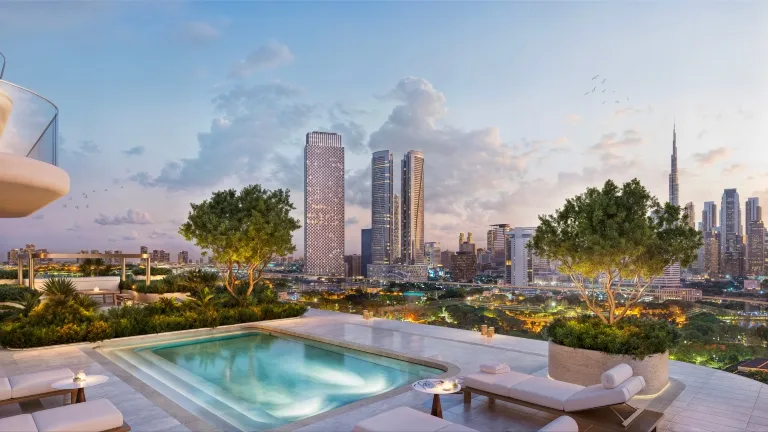
<p>City Walk’s recent positioning offers a useful reference for how tenant strategy reinforces destination strength. With reported occupancy moving towards 98% in 2024 following expansion and new openings, the outcome reflects active curation rather than passive leasing. For buyers and investors, that operational discipline reduces “neighbourhood risk”, limiting the likelihood of quality dilution over time.</p>
<h2>Walkability And Convenience Are Now Priced In </h2>
<p>Dubai’s planning direction increasingly aligns with walkable, people-first urbanism. The <a href="https://u.ae/en/about-the-uae/strategies-initiatives-and-awards/strategies-plans-and-visions/transport-and-infrastructure/dubai-2040-urban-master-plan">Dubai 2040 planning agenda</a> includes a push to increase walking and soft mobility a policy framework that favours denser, integrated urban form.</p>
<p>In investment terms, walkability is not an aesthetic preference, it is a demand multiplier:</p>
<ul>
<li>Higher viewing-to-transaction conversion (buyers understand the lifestyle quickly)</li>
<li>Broader tenant pool (professionals, couples, small families, relocators)</li>
<li>Exit liquidity (more buyers compete for fewer well-located units) </li>
</ul>
<p>Dubai’s price cycle context supports why this matters. By mid-2025, <a href="https://propertymonitor.com/insights/monthly-market-report/monthly-market-report-july-2025">Property Monitor’s Dynamic Price Index</a> placed average prices at approximately AED 1,625 per sq ft, materially above the prior market peak, which tends to increase buyer selectivity and reward locations with tangible usability and access. In that environment, mixed-use districts often maintain pricing power because the “value” is experienced daily, not only on launch day.</p>
<h2>Mixed-Use Supports Income Resilience Through Tenant Diversity </h2>
<p><a href="https://meraas.com/en/latest-post/guide/5-things-know-about-investing-dubai-property">Rental performance</a> is ultimately about the depth of demand and the friction of relocation. Districts with integrated retail, offices, transport access, and public realm tend to retain tenants longer, not because rents cannot rise, but because the cost (time, commute, convenience) of moving is higher. Dubai is also tightening market transparency through tools like the <a href="https://dubailand.gov.ae/en/eservices/rental-index">Dubai Land Department’s Rental Index services</a> and <a href="https://dubailand.gov.ae/en/news-media/the-smart-rent-index-mitigates-inflation-in-dubai-and-enhances-market-transparency/#/">Smart Rental Index communications</a>, which reinforce the importance of pricing that reflects real market conditions. For investors, disciplined pricing, clearer benchmarking, and more reliable underwriting assumptions.</p>
<h2>What Sophisticated Buyers Actually Look for in Mixed-Use</h2>
<p>For UHNWIs and international investors, the question is rarely “Is it mixed-use?” It is “Is it well-run mixed-use?” Key signals include:</p>
<ul>
<li>Operational quality: consistent maintenance standards, curated tenant mix, and event programming cadence</li>
<li>Public realm quality: shade, walkability, seating, landscaping, lighting, and noise management</li>
<li>Demand diversity: weekday activity (work/errands) as well as weekend activity (leisure)</li>
<li>Supply discipline: limited comparable stock within the immediate walking catchment</li>
</ul>
<p>These factors influence not just lifestyle satisfaction, but risk-adjusted performance, how the asset behaves when market sentiment cools.</p>
<h2>Destination-Led Demand Is Structural, Not Seasonal</h2>
<p>Dubai’s mixed-use destinations influence property demand because they turn “place” into an everyday habit. Footfall becomes a proxy for relevance; relevance becomes rental depth and resale liquidity; and planning discipline becomes long-term pricing power. In a market defined by scale and global visibility, the most investable addresses tend to be the ones that function as self-reinforcing urban ecosystems, , not isolated residential pockets. </p>
<p><a href="https://meraas.com/en/project-listing">Explore Meraas’ mixed-use communities</a> that are redefining urban living, and discover how they are designed to integrate retail, culture, workplaces and residential living into resilient, urban ecosystems that support lifestyle value and long-term demand.</p>
<h2>FAQs</h2>
<h3>1.How does footfall translate into higher property demand?</h3>
<p>Footfall indicates repeat visitation and habit. In mixed-use districts, that repeat activity supports stronger leasing demand, broader tenant profiles, and more frequent resale transactions, all of which improve liquidity and reduce vacancy risk.</p>
<h3>2.Are mixed-use locations always better for investors?</h3>
<p>Not automatically. The advantage depends on placemaking quality, tenant curation, governance, and supply discipline. Poorly planned mixed-use can dilute appeal, while well-run destinations tend to sustain demand through multiple cycles.</p>
<h3>3.What data points best indicate a mixed-use district’s strength?</h3>
<p>Look for credible indicators of sustained activity and market depth: visitor volumes at nearby anchors (where available), occupancy/tenant mix signals, rental benchmarking tools, and transaction velocity in the surrounding catchment.</p>
Back to MediaOther Media
Explore more articles from Meraas