Project Search
No Results Found
Search Results - Blog
Search Results - FAQs
No Results Found
No Result Found
The Journal - 14th May 2026
How Buyer Psychology Changes Across Different Property Price Segments in Dubai
<img loading="lazy" src="/sites/default/files/2026-05/Banner_5.jpg" width="1920" height="1080" alt="How Buyer Psychology Changes Across Different Property Price Segments in Dubai " />
<p>In Dubai’s property market, some buyers prioritise affordability and rental strength, while place greater emphasis on privacy, architectural distinction, long-term wealth preservation, and global appeal. This makes buyer psychology an important lens for understanding performance patterns across Dubai’s real estate market. </p>
<p>The way buyers interpret value also affects how Dubai property prices behave over time. In accessible segments, confidence is often built around practical returns, liquidity, and community convenience. In higher-value and luxury segments, emotional appeal becomes more closely tied to exclusivity, architectural quality, and the ability of a home to remain desirable across market cycles. These evolving priorities influence demand resilience across different asset classes. Understanding these shifts helps investors assess what people are buying and why certain assets continue to attract demand. </p>
<h2>Why Price Segment Shapes Buyer Motivation </h2>
<p>Price segments influence how buyers define value. In lower and mid-market brackets, value is often measured through affordability, monthly outgoings, rental yield, and exit liquidity. In higher-value segments, buyers tend to assess scarcity, architectural distinction, community maturity, and the ability of the asset to hold relevance across market cycles. This distinction highlights how financial logic gradually blends with lifestyle positioning at higher price points. </p>
<h2>Entry and Mid-Market Buyers: Practicality Comes First </h2>
<p>In the entry and mid-market segments, buyers are usually more sensitive to price, payment structure, mortgage conditions, and rental returns. Their psychology is shaped by financial clarity. A property must make sense as a home, an income-generating asset, or a manageable first investment. </p>
<p>This group often looks for communities with transport access, daily conveniences, schools, wellness facilities, and steady tenant demand. The emotional appeal of design still matters, but it usually sits behind practical questions: </p>
<ul>
<li>Can the property be rented quickly? </li>
<li>Are service charges reasonable? </li>
<li>Is the location improving? </li>
<li>Is there enough resale activity to support future liquidity? <br> </li>
</ul>
<p>In this segment, consistent occupancy and predictable cash flows often carry more weight than design-led differentiation. </p>
<h2>Upper-Mid Segment Buyers: Lifestyle and Liquidity Must Align </h2>
<p>The upper-mid segment is where buyer psychology becomes more selective. These buyers are often upgrading from smaller homes, relocating within Dubai, or purchasing with a longer holding period in mind. They want more space, stronger community planning, better finishes, and clearer lifestyle advantages, but they still compare value carefully. </p>
<h3>Where Lifestyle Quality Supports Resale Depth </h3>
<p>In this bracket, buyers often balance emotional and financial logic. A home must feel refined, but it must also demonstrate resale depth. Proximity to lifestyle destinations, green spaces, waterfront settings, retail integration, and community amenities can influence appreciation because these features increase daily usability and widen the future buyer pool. This dual focus allows properties to appeal to both end-users and future investors, strengthening market depth. </p>
<h3>Higher Ticket Sizes Reflect More Selective Demand </h3>
<p><a href="https://pdf.euro.savills.co.uk/uae/dubai/dubai-residential-mim-q4-2025.pdf"><u>Savills</u></a> reported that 9% of Dubai residential transactions in 2025 were above AED 5 million, up from 7.7% in 2024. The same report noted that average villa and townhouse ticket prices crossed AED 6 million in 2025, compared with AED 5.4 million in 2024. This shift signals a growing preference for larger homes with stronger lifestyle positioning, alongside more deliberate purchasing decisions. . </p>
<h2>Luxury Buyers: Scarcity Becomes the Core Value Signal </h2>
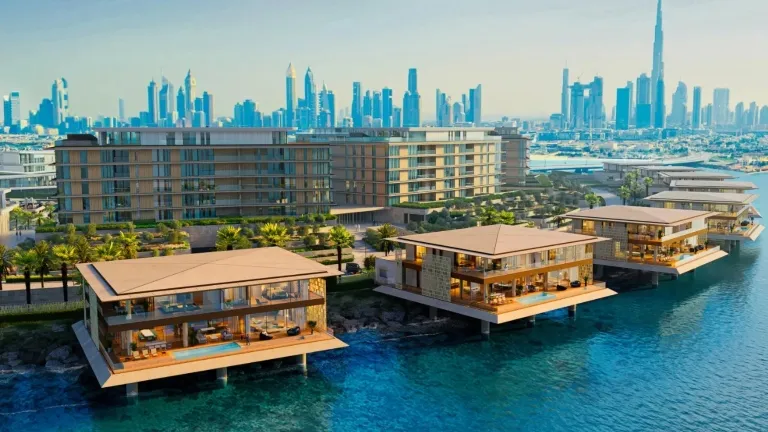
<p>In <a href="https://meraas.com/en/latest-post/journal/how-investors-can-evaluate-resale-strength-dubai-communities"><u>Dubai’s luxury real estate</u></a>, buyer psychology is less driven by affordability and more influenced by scarcity, privacy, design quality, and long-term capital preservation. HNWIs and global investors often see property as both a lifestyle decision and a store of value. Their focus is not simply on owning a larger home, but on acquiring an asset that is difficult to replicate. </p>
<h3>Distinctive Assets Hold Stronger Global Appeal </h3>
<p>This is why prime homes with distinctive views, limited waterfront access, strong architecture, and mature community planning can command stronger attention. At this level, buyers often ask whether the asset will remain desirable to a small but resilient global audience. Homes that combine location, design integrity, and limited availability tend to retain stronger cross-border appeal. </p>
<h3>Ultra-Luxury Sales Reflect Demand for Rare Homes </h3>
<p>Dubai’s ultra-luxury market reflects this shift. In 2025, the city recorded <a href="https://www.khaleejtimes.com/business/property/dubai-sells-500-homes-over-10-million-2025-new-record"><u>500 residential sales above US$10 million</u></a>, compared with 435 in 2024, while sales above US$25 million also reached a new high. This trend highlights sustained global demand for trophy assets that offer both exclusivity and long-term positioning.. </p>
<h2>What This Means for Long-Term Property Appreciation </h2>
<p><a href="https://meraas.com/en/latest-post/journal/how-masterplans-influence-appreciation"><u>Property appreciation</u></a> in Dubai is shaped by how well an asset matches the psychology of its target buyer. A mid-market apartment may appreciate when it offers efficient layouts, rental demand, and accessible pricing. An upper-mid villa may perform better when it offers family functionality, community infrastructure, and limited competing supply. A luxury residence may hold value when it delivers privacy, design integrity, and enduring scarcity. </p>
<p>The key lesson is that price alone does not define value. The strongest assets are those where buyer motivation, location fundamentals, product quality, and market depth work together. As Dubai’s real estate market continues to mature, alignment between product positioning and buyer intent will play an increasingly important role in sustaining long-term demand. As Dubai matures, the most resilient communities will be those that understand how people want to live, invest, and preserve wealth over time. Explore <a href="https://meraas.com/en/project-listing"><u>Meraas communities</u></a> to invest in properties with long-term appreciation. </p>
<h2>FAQs </h2>
<h3>How Does Buyer Psychology Differ Across Dubai Property Price Segments? </h3>
<p>Buyer psychology differs by financial priority. Entry and mid-market buyers often focus on affordability, rental yield, and resale liquidity, while luxury buyers place more weight on scarcity, privacy, design quality, and long-term capital preservation. </p>
<h3>Do Dubai Property Prices Move the Same Way Across All Segments? </h3>
<p>No. Dubai property prices vary by location, property type, supply levels, buyer depth, and market cycle. Apartments, villas, waterfront homes, and ultra-luxury residences can each respond differently to changes in demand. </p>
<h3>What Should Investors Look for Across Different Price Segments? </h3>
<p>Investors should assess the buyer profile behind each segment. Strong indicators include rental demand, resale transactions, community maturity, service charges, infrastructure, scarcity, and the depth of future demand.</p>
Back to MediaOther Media
Explore more articles from Meraas

Buying Off-Plan Property in Dubai: How Luxury Buyers Should Assess Build Specifications