Project Search
No Results Found
Search Results - Blog
Search Results - FAQs
No Results Found
No Result Found
The Journal - 19th December 2025
How Masterplans Influence Appreciation
<img loading="lazy" src="/sites/default/files/2026-01/Thumbnail_7.jpg" width="768" height="432" alt="How Masterplans Influence Appreciation" />
<p>Many investors approach real estate through yield models and capital projections. Yet one of the most decisive determinants of long-term performance often sits beyond the spreadsheet: the masterplan. How can you be certain that neighbouring land will complement your assets rather than compromise it? How do you safeguard desirability as the surrounding area evolves? The answer lies in the discipline of master-planned development and its ability to shape value over time.</p>
<p>A well-executed masterplan introduces certainty into an otherwise unpredictable real estate lifecycle.</p>
<h2>What Is a Masterplan?</h2>
<p>A masterplan establishes a long-term vision that aligns residential development with transport networks, open spaces, and lifestyle infrastructure. It distinguishes cohesive communities from fragmented developments. For buyers and investors, this framework provides reassurance that density, land use, and visual corridors are governed by a defined strategy than speculative future decisions.</p>
<p>It is the level of planning control that underpins confidence in both liveability and long-term asset performance. The Investment Logic: Why Masterplans Drive Appreciation</p>
<p>The relationship between masterplanning and capital growth is driven by two fundamentals: risk mitigation and <a href="https://meraas.com/en/latest-post/blog/impact-sustainable-practices-property-values-dubai">sustained demand.</a></p>
<p>Integrated communities consistently outperform standalone assets because they are designed to support daily life in a complete and considered way. When a neighbourhood is designed with a clear identity, it fosters a sense of belonging that drives retention. Therefore, high occupancy rates and strong rental demand are natural by-products of this cohesion enabling investors to anticipate long-term growth.</p>
<p>In established masterplans, growth is incremental, structured, and far less exposed to volatility.</p>
<h2>Key Drivers of Appreciation Within Masterplans</h2>
<p>The premium attached to master-planned communities is intentional, shaped by several interdependent factors: Location and Connectivity</p>
<p>Strategic location is enhanced by thoughtful accessibility. Masterplans that prioritise walkability and efficient links to key commercial and cultural districts benefit from broader and more resilient demand. Coastal and centrally positioned communities remain particularly scarce, reinforcing long-term value through limited supply.</p>
<h3>1. Mixed-Use Integration</h3>
<p>Residential environments that incorporate retail, leisure, wellness, and workspaces reduce reliance on external districts This internal balance supports a self-sustaining rhythm of daily life, strengthening tenant retention and underpinning consistent demand. Community Infrastructure</p>
<p>Long-term value is closely tied to social infrastructure. The presence of established schools, healthcare facilities, and pedestrian networks encourages permanent residency, support stable demographics and reducing vacancy risk.</p>
<h3>2. Sustainability & Design Quality</h3>
<p>Environmental performance and architectural quality increasingly influence pricing. Energy-efficient design, landscape-led planning, and wellness-oriented layouts align with the expectations of global buyers seeking future-ready assets.</p>
<h3>3. Developer Reputation</h3>
<p><a href="https://meraas.com/en/about-us">Proven developers</a> bring execution certainty. A strong track record in delivery, maintenance, and community management reinforces buyer trust, accelerating appreciation across both completed and forthcoming phases.</p>
<h3>Case Study: How Meraas Masterplans Create Appreciation</h3>
<p>At Meraas, our approach focuses on creating holistic communities that offer everything a resident needs to enjoy a luxury lifestyle.</p>
<h3>Design Philosophy: Lifestyle First</h3>
<p>Public realms, walkability, and curated retail experiences form the backbone of Meraas developments. This emphasis embeds vibrancy and usability into everyday life, strengthening long-term desirability and market perception.</p>
<h3>Proven Appreciation in Meraas Communities</h3>
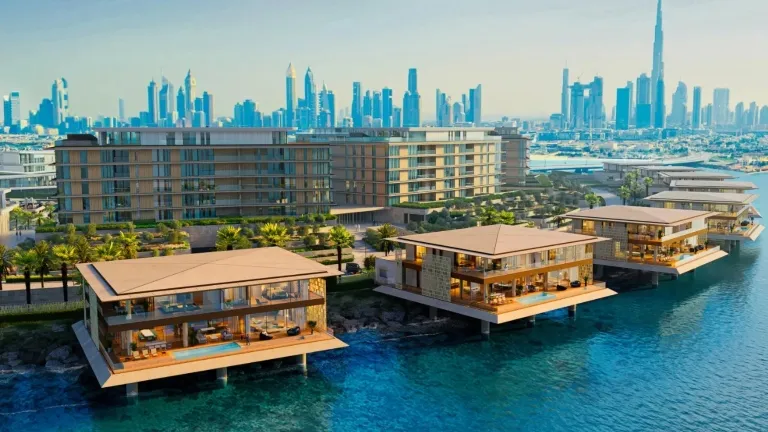
<p>Destinations such as <a href="https://meraas.com/en/master-development/bluewaters">Bluewaters Island</a>, <a href="https://meraas.com/en/master-development/city-walk">City Walk</a>, <a href="https://meraas.com/en/project/port-de-la-mer">Port de La Mer</a>, and <a href="https://meraas.com/en/master-development/jumeriah-bay-island">Jumeirah Bay</a> have demonstrated sustained capital growth alongside resilient rental performance, frequently exceeding broader market benchmarks. These communities illustrate how disciplined planning and design integrity translate into enduring value.</p>
<h3>Impact on Neighbourhood Value</h3>
<p>Meraas developments often elevate their surrounding districts through the introduction of premium retail, dining, and leisure infrastructure. This uplift establishes new pricing benchmarks and reinforces the wider area’s appeal to both residents and investors.</p>
<p>Such developments recalibrate perception, positioning entire precincts within a higher-value bracket.</p>
<h2>Why Masterplans Are the Smart Investor’s Advantage</h2>
<p><a href="https://meraas.com/en/contact-us">Real estate investment</a> ultimately rests on confidence in what lies ahead. Master-planned communities offer visibility into that future by aligning growth, infrastructure, and lifestyle within a controlled framework.</p>
<p>For investors, this clarity supports informed decision-making, stronger demand fundamentals, and appreciation that compounds as the community reaches full maturity.</p>
<p>Through this approach, Meraas continues to shape destinations where value is reflected in both financial performance and a living environment designed for longevity.</p>
<h2>Frequently Asked Questions</h2>
<h3>1.Do properties in master planned communities have higher service charges?</h3>
<p>Service charges may be marginally higher due to the upkeep of shared amenities, landscaping, and security. This investment preserves visual standards, community cohesion, and long-term rental appeal.</p>
<h3>2.How does a masterplan protect my property view?</h3>
<p>Masterplans regulate building heights, plot ratios, and spatial relationships, offering greater certainty around outlook, privacy, and density over time.</p>
<h3>3.Are master planned communities better for short-term or long-term investment?</h3>
<p>They perform strongly in the short term due to amenity access and tenant demand, while their greatest advantage emerges over the long term as infrastructure, landscaping, and retail components become fully established.</p>
Back to MediaOther Media
Explore more articles from Meraas

Buying Off-Plan Property in Dubai: How Luxury Buyers Should Assess Build Specifications