Project Search
No Results Found
Search Results - Blog
Search Results - FAQs
No Results Found
No Result Found
The Journal - 19th March 2026
Density Vs Privacy: How Built Form Impacts Pricing Stability?
<img loading="lazy" src="/sites/default/files/2026-04/Banner_14.jpg" width="1920" height="1080" alt="Density Vs Privacy: How Built Form Impacts Pricing Stability?" />
<p>In Dubai’s residential market, pricing stability is built from the relationship between density, privacy, height, spacing, access, open space, and amenity planning. These factors increasingly determine how residential assets perform across market cycles, influencing both lifestyle appeal and long-term value. But was density planned in a way that protects privacy, liveability, and long-term desirability within Dubai’s evolving urban framework?</p>
<h2>Why Built Form Matters to Long-Term Value</h2>
<p>Built form affects how a community feels, functions, and performs. In higher-density districts, value depends on whether planning creates convenience without congestion. In lower-density neighbourhoods, value depends on whether privacy, space, and exclusivity are supported by efficient access, infrastructure capacity, and amenity depth.</p>
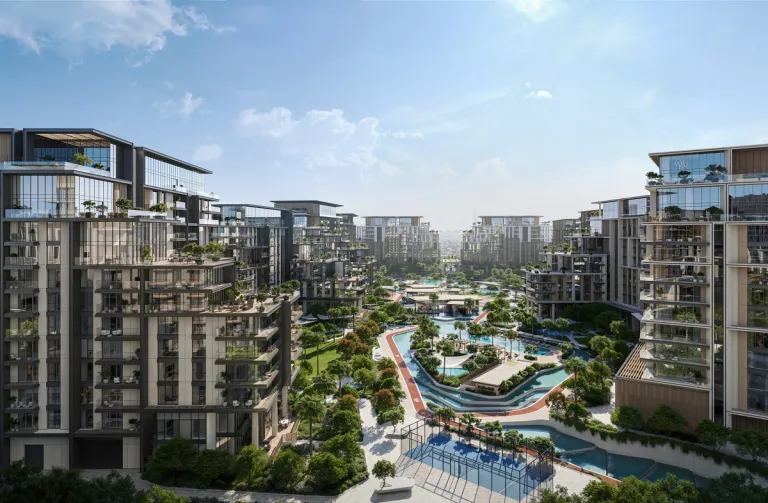
<p>This is why two communities with similar homes can behave differently in the resale market. A well-planned mid-rise district with walkable streets, shaded public spaces, controlled traffic, and curated retail can sustain demand because it improves daily usability and long-term resident satisfaction. By contrast, density without spatial discipline can create pressure on parking, privacy, views, noise, and movement, which may weaken buyer confidence over time.</p>
<h2>Density Is Not the Risk, Poorly Managed Density Is </h2>
<p><a href="https://meraas.com/en/latest-post/journal/what-makes-residential-community-globally-competitive">Density can support value</a> when it brings people closer to retail, dining, wellness, workspaces, schools, and mobility links. This principle is central to Dubai’s urban development strategy. . The <a href="https://u.ae/en/about-the-uae/strategies-initiatives-and-awards/strategies-plans-and-visions/transport-and-infrastructure/dubai-2040-urban-master-plan">Dubai 2040 Urban Master Plan</a> prioritises more integrated urban centres, improved access to services, expanded green and recreational areas, and a more efficient distribution of residents around infrastructure.</p>
<p>Managed density can improve footfall, leasing depth, and community activation. More residents can support better amenities, stronger retail ecosystems, and more consistent rental demand when scale and access are aligned.</p>
<p>The risk appears when density increases without enough planning discipline. If buildings are too closely spaced, public spaces are undersized, or access points are poorly designed, density can begin to erode the very qualities premium buyers pay for: calm, privacy, light, views, and ease of movement especially in lifestyle-led residential communities.</p>
<h2>Privacy as a Pricing Stabiliser</h2>
<p>Privacy is one of the strongest non-financial drivers of premium residential demand. It becomes especially important for HNWIs, international families, and end-users who evaluate homes not only as investments, but as long-term living environments within competitive global markets like Dubai.</p>
<p>In built form terms, privacy is created through spacing, orientation, setbacks, landscape buffers, low visual intrusion, controlled access, and thoughtful separation between public and private realms. While these elements are often viewed as design choices, they influence pricing behaviour directly.</p>
<p>Homes that protect privacy tend to face less substitution risk. A buyer comparing two similar assets may accept a higher price for the one that offers better separation, stronger views, quieter surroundings, or fewer direct sightlines. Over time, this dynamic can support resale resilience, particularly in communities where comparable supply is limited or tightly controlled.</p>
<h2>How Villas and Apartments Behave Differently</h2>
<p>The relationship between density and pricing stability is especially visible across property types. Villas often benefit from land scarcity, private outdoor space, and lower-density planning. Apartments, meanwhile, depend more heavily on building quality, amenity programming, vertical privacy, views, and access to surrounding lifestyle infrastructure. </p>
<p><a href="https://valustrat.com/pages/dubai-real-estate-market-report-dec-2025?srsltid=AfmBOooIubtLG-7XbXCySNdmhTh26e2Rt-33qOqYwyP8yGmsG4QbNnPY">ValuStrat </a>reported that Dubai residential values rose 19.8% year-on-year in 2025, with villas increasing by 25.1% and apartments by a more moderate rate. This performance gap reflects the continued preference for larger-format homes and privacy-led living, particularly where supply is more constrained and end-user demand is deeper.</p>
<p>However, this does not mean apartments are structurally weaker. In 2025, apartments still represented the majority of residential transactions, accounting for 83% of total activity according to <a href="https://pdf.euro.savills.co.uk/uae/dubai/dubai-residential-mim-q4-2025.pdf">Savills</a>. Their long-term stability depends on whether density is supported by efficient layouts, professional management, amenity quality, and access to employment hubs, transport, and retail rather than density alone.</p>
<h2>Why Scarcity and Planning Discipline Matter</h2>
<p>Pricing stability improves when built form limits direct comparability. A villa with generous spacing, a townhouse in a well-planned family community, or an apartment with protected views and walkable access may hold value better because fewer alternatives can replicate the same living experience.</p>
<p>This is where planning discipline becomes critical. Communities that control height, view corridors, plot ratios, landscape design, and amenity phasing can protect long-term desirability more effectively than developments that maximise density without considering resident experience. The market-cycle context also matters. <a href="https://www.reuters.com/world/middle-east/dubai-real-estate-prices-likely-face-double-digit-fall-after-years-boom-fitch-2025-05-29">Fitch </a>has warned that a larger delivery pipeline could create downward pressure in parts of Dubai’s residential market, although prime locations and delayed deliveries may soften this impact. In that environment, built form becomes a filter: assets with stronger privacy, better planning, and clearer lifestyle utility are more likely to remain resilient when buyers gain more choice.</p>
<h2>What Investors Should Assess Before Buying</h2>
<p>Investors should look beyond unit size and headline price. The stronger question is how the home sits within its wider built environment and competitive set.</p>
<p>Key indicators include building spacing, access routes, parking logic, lift ratios, view protection, public realm quality, amenity scale, noise exposure, <a href="https://meraas.com/en/latest-post/journal/service-charges-maintenance-standards-and-asset-preservation-what-buyers">service-charge value</a>, and whether density supports convenience without reducing privacy. A lower entry price may look attractive, but if the built form creates future friction, resale depth and rental retention may weaken over holding periods.</p>
<p>For premium communities, the most defensible assets are often those that combine urban access with a sense of retreat. This balance allows residents to enjoy the energy of a connected district while preserving the privacy and calm expected from a high-value home in a maturing market.</p>
<h2>Built Form Is a Value Signal</h2>
<p>For investors, built form is therefore not a design detail. It is a pricing signal that influences rental depth, resale stability, and long-term asset performance. As Dubai’s market becomes more selective, communities that manage this balance well are more likely to remain relevant, desirable, and defensible over time.</p>
<p>This is where Meraas communities offer a considered perspective on contemporary urban living, bringing together design, privacy, connectivity, and place quality in ways that support both lifestyle appeal and long-term confidence. <a href="https://meraas.com/en/contact-us">Discover investment opportunities with Meraas.</a></p>
<h2>FAQs</h2>
<h3>1.How Does Built Form Affect Property Pricing Stability?</h3>
<p>Built form affects pricing stability by shaping privacy, access, views, amenity use, and daily comfort. Homes in well-planned communities with balanced density, clear movement, and protected private space usually face stronger end-user demand and lower substitution risk.</p>
<h3>2.Is Lower Density Always Better for Property Value?</h3>
<p>Not always. Lower density can support privacy and exclusivity, but it still needs strong connectivity, amenities, and community management.</p>
<h3>3.What Should Investors Check When Comparing Density and Privacy?</h3>
<p>Investors should review building spacing, view corridors, access points, parking, noise exposure, amenity capacity, landscaping, and overall community planning.</p>
Back to Media