Project Search
No Results Found
Search Results - Blog
Search Results - FAQs
No Results Found
No Result Found
The Journal - 8th October 2026
The Sensory Side of Luxury Living in Dubai: Light, Space, Sound and Materiality
<img loading="lazy" src="/sites/default/files/2026-11/768x432_10.jpg" width="768" height="432" alt="The Sensory Side of Luxury Living in Dubai: Light, Space, Sound and Materiality" />
<p>Luxury homes in Dubai are experienced through more than floor area, views and amenities. The quality of daylight across a room, the transition between private and social spaces, the level of sound isolation and the feel of stone, timber or metal all shape how a home is experienced every day.</p>
<p>In Dubai, these qualities also need to respond to intense sunlight, high cooling demand and, in waterfront settings, greater exposure to humidity and salt-laden air. A well-designed residence balances visual openness with thermal comfort and privacy, while materials and finishes need to retain their quality over years of regular use.</p>
<h2>How Can Buyers Assess Natural Light, Spatial Flow, Acoustics and Material Quality When Viewing a Luxury Home in Dubai?</h2>
<p>A viewing of a luxury home in Dubai can reveal qualities that floor plans and photography cannot. Natural light is better judged by noting which rooms receive direct or indirect sun, whether deeper parts of the home remain bright and whether extensive glazing creates glare or excessive heat near windows.</p>
<p>Spatial flow becomes clearer through movement. The transition from entrance to living areas, the separation between entertaining and bedroom zones, corridor widths and the relationship between indoor and outdoor spaces influence whether a large residence feels generous or fragmented.</p>
<p>Sound requires similar attention. Closed windows and internal doors can reveal how effectively the home limits traffic, neighbouring activity, mechanical equipment and noise between rooms. In apartments, bedrooms positioned beside busy corridors, lift lobbies, pools or communal terraces may experience more frequent disturbance, making their location within the floor plan important to acoustic comfort.</p>
<p>Material quality is most apparent at junctions and frequently used surfaces. Stone alignment, timber edges, cabinetry hinges, door hardware, grout, sealants and the finish around sockets or ventilation grilles often reveal more about workmanship than large decorative surfaces.</p>
<h2>Which Orientation, Window-Placement, Glazing and Shading Choices Provide Daylight While Supporting Thermal Comfort and Privacy in Dubai’s Climate?</h2>
<p>In Dubai, more glazing does not automatically create a more comfortable luxury home. Orientation, glass specification and external shading determine how daylight enters the interior and how much solar heat accompanies it.</p>
<p>West-facing openings can receive stronger afternoon sun, making shading particularly important. Deep balconies, recessed terraces, overhangs, fins and carefully positioned screens can reduce direct solar exposure while allowing daylight and views to remain part of the interior experience. Window placement can also bring light deeper into a room without exposing the entire living space to neighbouring properties.</p>
<p>Glazing performance is equally important. Dubai Municipality's building framework considers factors including thermal transmittance, shading performance and light transmittance when assessing glazed building elements, reflecting the relationship between daylight and heat gain in Dubai's climate.</p>
<p>Privacy also depends on what the glazing faces. Full-height windows overlooking open water or landscaped space create a different experience from glazing directly opposite another tower or terrace. The height of the residence, neighbouring buildings, balcony configuration and use of screens therefore need to be considered alongside the size of the windows.</p>
<h2>Why Do Ceiling Height, Room Proportions and Circulation Have Such a Strong Effect on Perceived Space, Comfort and Property Value?</h2>
<p>Ceiling height, room proportions and circulation shape how spacious a luxury home feels more than floor area alone. Ceiling height affects vertical volume, while room proportions determine how comfortably furniture, circulation and daily activities fit within that volume.</p>
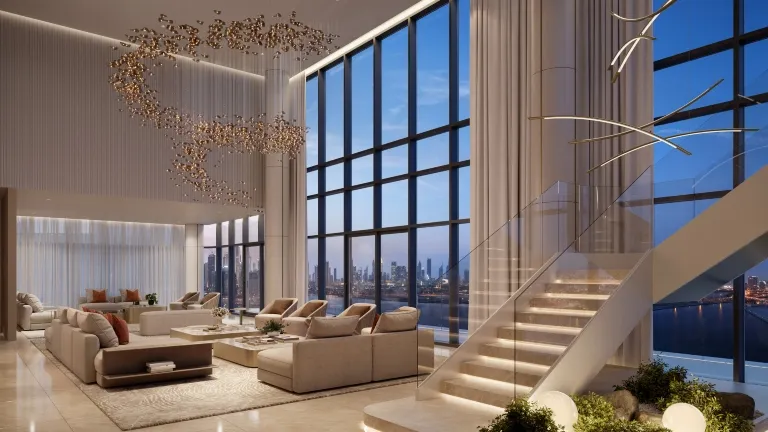
<p>A double-height living room can create a strong sense of scale, particularly where it is combined with tall glazing and views. In other spaces, proportion is more important than height. A large bedroom with awkward wall lengths, limited furniture positions or excessive circulation space may function less effectively than a slightly smaller but better-proportioned room.</p>
<p>Circulation also influences how much of the home feels usable. Long corridors, poorly positioned stairs or routes that cut through living spaces can consume valuable floor area. In larger villas, well-planned circulation can separate formal entertaining, family areas, bedrooms and service functions without creating unnecessary distance between them.</p>
<p>These qualities can influence how a residence is perceived in the resale market, particularly within the same development where buyers may compare different layouts. They do not determine value independently, but generous proportions and efficient planning can distinguish one property from another when location, condition and specification are otherwise similar.</p>
<h2>Which Interior Materials Offer the Best Balance of Tactile Quality, Durability and Manageable Maintenance in Dubai?</h2>
<p>The best interior materials for Dubai homes are assessed by suitability rather than by price or rarity. Different surfaces perform well in different parts of a home.</p>
<p>Natural stone provides variation, weight and a tactile finish that can age well, but some stones are porous and require sealing or specialist maintenance. Large slabs also depend heavily on installation quality, particularly at joints and edges.</p>
<p>Porcelain and high-quality ceramic surfaces can reproduce stone or other finishes while offering high resistance to staining, moisture and regular cleaning. They can be particularly practical in bathrooms, kitchens and high-use areas where lower maintenance is valuable.</p>
<p>Timber and engineered wood introduce warmth and texture to otherwise hard interiors. Engineered products generally offer greater dimensional stability than solid timber, but installation, humidity control, surface protection and exposure to direct sunlight remain important.</p>
<p>Metal, glass and joinery finishes depend heavily on detailing. Handles, hinges, drawer mechanisms, edge finishes and coating quality experience repeated use and can reveal wear earlier than decorative surfaces. In waterfront homes, appropriate specifications for exposed metalwork become more important because coastal conditions can accelerate corrosion.</p>
<p>The strongest interiors usually use a limited palette consistently rather than introducing expensive finishes indiscriminately. </p>
<h2>What Acoustic-Design Solutions Protect Privacy and Reduce Noise Without Compromising Natural Light or Visual Openness?</h2>
<p>Acoustic privacy in a luxury home depends on the entire building assembly rather than a single feature. Large windows can remain visually open while providing stronger sound isolation when the glazing specification, frame construction and perimeter seals are designed for acoustic performance.</p>
<p>Inside the residence, insulated partitions, solid-core doors and effective seals can reduce sound transfer between bedrooms, living areas and service spaces. The placement of wardrobes, bathrooms or circulation zones can also create buffers between rooms requiring greater privacy.</p>
<p>Soft materials help control reverberation within large spaces. Rugs, curtains, upholstered furniture, acoustic wall treatments and selected ceiling finishes absorb sound that would otherwise reflect from stone, glass and other hard surfaces. This becomes particularly relevant in double-height living rooms or open-plan interiors where large reflective surfaces can make conversations and everyday activity feel louder.</p>
<p>Mechanical systems also influence acoustic comfort. Air-conditioning equipment, pumps, lifts and service areas are easier to overlook during a brief viewing, yet persistent low-level noise can affect bedrooms and quieter rooms. Their location, vibration isolation and separation from living spaces therefore form part of the overall acoustic design.</p>
<h2>When Sensory Quality Supports Long-Term Living</h2>
<p>Sensory quality in luxury homes is defined by how light, proportion, acoustics and materials work together over time. A home that remains comfortable in strong daylight, feels intuitive to move through, protects quieter spaces and uses finishes suited to regular use is more likely to retain its appeal beyond the initial viewing.</p>
<p>Across <a href="https://meraas.com/en/developments-listing">Meraas developments</a>, considered architecture, generous proportions, natural light and refined material choices contribute to homes designed for both visual impact and everyday comfort. From waterfront residences to landscaped villa communities, each setting offers a distinct expression of luxury shaped around privacy, quality and long-term liveability.</p>
<h2>FAQs</h2>
<h3>Does more natural light always make a luxury home more comfortable?</h3>
<p>No, comfort depends on orientation, glazing performance, shading and how direct sunlight enters the interior throughout the day.</p>
<h3>Why is material ageing important when evaluating a luxury property?</h3>
<p>Finishes that retain their appearance, texture and performance with regular use can reduce future maintenance and help preserve the quality of the interior.</p>
<h3>Should a luxury home be viewed at different times of day?</h3>
<p>Yes, changes in sunlight, external activity and surrounding noise can reveal differences in glare, privacy, temperature and acoustic comfort that may not be obvious during a single viewing.</p>
Back to MediaOther Media
Explore more articles from Meraas