Project Search
No Results Found
Search Results - Blog
Search Results - FAQs
No Results Found
No Result Found
The Journal - 27th July 2026
How Cultural Districts Like d3 Influence Property Demand in Dubai
<img loading="lazy" src="/sites/default/files/2026-08/768x432%20%282%29.jpg" width="768" height="432" alt="How Cultural Districts Like d3 Influence Property Demand in Dubai" />
<p>Cultural districts function as powerful urban ecosystem, concentrating employment, education, events, public space, and specialised businesses within one location. They create recurring reasons to visit, work, and eventually live nearby, strengthening both economic activity and residential appeal.</p>
<p>Dubai Design District (d3) illustrates this shift. Since opening in 2015, the district has developed into a specialised creative ecosystem with more than 1,100 businesses and 20,000 creative professionals. Its expansion from a commercial and cultural destination into a residential neighbourhood shows how employment clusters and cultural identity can become tangible drivers of property demand and long-term neighbourhood desirability.</p>
<h2><strong>Why Culture is Becoming a Property Demand Driver</strong></h2>
<p>Culture influences residential demand when it generates sustained economic activity. Galleries, studios, and events contribute to neighbourhood character, but the more important investment factor is the employment, entrepreneurship, and international capital that develop around them. When supported by a thriving business ecosystem, culture becomes an economic catalyst rather than simply a lifestyle amenity.</p>
<h3><strong>Strong Growth in Creative Industry Investment</strong></h3>
<p>Dubai attracted <a href="https://dubaiculture.gov.ae/en/news-and-press-releases/Dubai-retains-top-global-position-for-attracting-Greenfield-FDI-Projects-in-cultural-and-creative">971 greenfield foreign direct investment projects</a> across its cultural and creative industries in 2024. These projects brought AED18.86 billion in capital and created 23,517 jobs, representing annual increases of nearly 60% and 9%, respectively. Dubai also ranked first globally among 233 cities for attracting creative-industry greenfield projects for the third consecutive year.</p>
<h3><strong>How Investment Translates into Housing Demand</strong></h3>
<p>This growth creates housing demand from designers, founders, executives, and skilled professionals who value proximity to their workplace and professional networks. In this context, culture supports property demand through a clear economic chain: investment attracts companies, companies attract talent, and concentrated talent increases the appeal of nearby homes. The result is a self-reinforcing cycle that supports both residential occupancy and long-term market confidence.</p>
<h2><strong>What Makes d3 Different from Conventional Residential Districts</strong></h2>
<p>A conventional residential area may depend primarily on housing supply and standard amenities. <a href="https://meraas.com/en/master-development/d3">d3</a> began with a specialised economic purpose, giving the district an established community commercial ecosystem, and cultural identity before its residential expansion.</p>
<h3><strong>A Diverse Creative Ecosystem Driving Activity</strong></h3>
<p>Dubai Design District hosts more than 100 events annually, three academic institutions, and a business base spanning international companies, regional firms, start-ups, and independent creators. Its design-focused business incubator has also supported more than 120 start-ups since its establishment.</p>
<p>These components create activity beyond traditional working hours. Education introduces a younger talent pipeline, events bring regular visitors, and creative businesses support dining, retail, and collaborative spaces. The result is a district with several overlapping demand sources rather than one that relies entirely on residential population growth. This diversity contributes to a more vibrant urban environment and helps sustain activity throughout the year.</p>
<h2><strong>How Creative Districts Attract a Distinct Buyer Profile</strong></h2>
<p>Creative districts tend to attract buyers who assess a neighbourhood through more than floor area and price. Design quality, professional networks, cultural programming, and architectural identity can influence the decision alongside conventional financial considerations.</p>
<p>This buyer profile may include creative-industry founders, international professionals, design-conscious families, and investors seeking differentiated assets. Such buyers often place greater value on neighbourhood identity because it affects daily experience, tenant appeal, and future resale positioning. For many, the surrounding environment becomes an extension of the lifestyle offered by the home itself.</p>
<h2><strong>Cultural Infrastructure and Long-Term Value</strong></h2>
<p>Physical cultural infrastructure, including event venues, educational institutions, studios, public spaces and creative workplaces, can strengthen <a href="https://meraas.com/en/latest-post/journal/understanding-demand-cycles-dubais-lifestyle-communities">long-term demand</a> by making a neighbourhood more distinctive and difficult to replicate elsewhere.</p>
<p>Dubai’s wider market provides an important backdrop. Residential values increased by 19.8% during 2025, according to <a href="https://valustrat.com/pages/dubai-real-estate-market-report-dec-2025">ValuStrat</a>, while <a href="https://dubailand.gov.ae/en/news-media/dubai-s-real-estate-transactions-surge-31-to-reach-aed-252-billion-in-q1-2026/#/">Dubai Land Department</a> recorded AED252 billion in real estate transactions during the first quarter of 2026, up 31% year on year.</p>
<h3><strong>Market Performance and the Importance of Asset Selection</strong></h3>
<p>The recent <a href="https://meraas.com/en/latest-post/blog/dubai-residential-property-market-analysis-and-property-price-trends-2025">Dubai property prices trend</a> shows strong citywide performance, but future growth is likely to become more dependent on asset selection as new supply enters the market. This increases the importance of locations with established economic functions, controlled planning, and recognisable identities. Neighbourhoods that combine residential quality with enduring demand drivers may be better positioned to maintain their competitive advantage over time.</p>
<h3><strong>The Role of Cultural Infrastructure in Supporting Property Value</strong></h3>
<p>Cultural infrastructure can therefore support property value by widening the potential resident and tenant base, encouraging longer neighbourhood engagement and differentiating the location from more interchangeable developments. It cannot guarantee <a href="https://meraas.com/en/latest-post/journal/what-capital-appreciation-investor-guide">appreciation</a>, but it can contribute to demand resilience when combined with limited supply, effective management, and disciplined urban planning. These characteristics can help strengthen a district's long-term appeal across multiple market cycles.</p>
<h2><strong>Meraas and the Residential Evolution of d3</strong></h2>
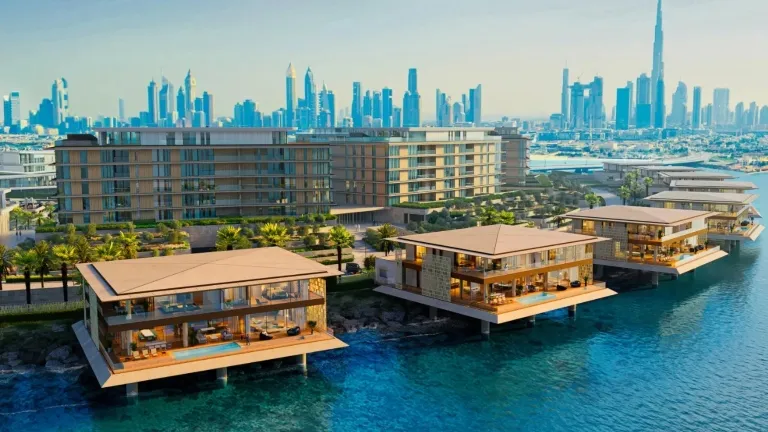
<p>Meraas is extending the district’s creative identity into a broader residential proposition. The expanded Dubai Design District masterplan introduces canal-front living, cultural quarters, landscaped public spaces and walkable urban streets, allowing residents to live within the same ecosystem in which creative businesses and institutions operate. This integration reflects a growing preference for neighbourhoods where work, culture, leisure, and residential life coexist seamlessly.</p>
<p><a href="https://meraas.com/en/project/designquarter-at-d3">Design Quarter at d3</a> established the district’s residential direction through design-led one- to three-bedroom apartments. <a href="https://meraas.com/en/project/at%C3%A9lis-at-d3">Atélis at d3</a> extends this evolution towards the waterfront with apartments, sky villas and penthouses shaped around architecture, views and access to the creative district. Together, these developments reinforce d3’s emergence as a destination where design-led living is closely connected to the surrounding creative economy.</p>
<h2><strong>Culture as a Marker of Neighbourhood Maturity</strong></h2>
<p>Cultural districts influence property demand when culture becomes part of the neighbourhood’s economic and spatial structure. Dubai Design District combines businesses, education, events, public space, and residential development, creating several reasons for people to remain connected to the area.</p>
<p>Its long-term performance will still depend on supply discipline, project quality, and community management. Yet the district’s established creative economy gives it a form of identity and demand for diversity that cannot be produced through residential construction alone.</p>
<h2><strong>FAQs</strong></h2>
<h3><strong>Why Does Dubai Design District Attract Residential Demand?</strong></h3>
<p>Dubai Design District attracts demand by combining a large professional community with events, education, dining, public spaces, and design-led workplaces. Residential development allows professionals and families to live closer to this established ecosystem.</p>
<h3><strong>Can Cultural Infrastructure Increase Property Values?</strong></h3>
<p>Cultural infrastructure can support values by increasing visitor activity, employment, and neighbourhood differentiation. Its impact is strongest when combined with high-quality homes, controlled supply, accessibility, and effective long-term management.</p>
<h3><strong>Is Dubai Design District Primarily a Business or Residential Area?</strong></h3>
<p>Dubai Design District began as a specialised creative business district. Its residential masterplan is transforming it into a more complete mixed-use neighbourhood where professional, cultural, and residential activity can operate within the same location.</p>
Back to MediaOther Media
Explore more articles from Meraas
Buying Off-Plan Property in Dubai: How Luxury Buyers Should Assess Build Specifications