Project Search
No Results Found
Search Results - Blog
Search Results - FAQs
No Results Found
No Result Found
The Journal - 24th July 2026
Dubai vs London, Singapore, and Miami: How Global Buyers Compare Luxury Lifestyle Real Estate
<img loading="lazy" src="/sites/default/files/2026-08/768x432%20%281%29.jpg" width="768" height="432" alt="Dubai vs London, Singapore, and Miami: How Global Buyers Compare Luxury Lifestyle Real Estate" />
<p>Luxury property decisions extend beyond architecture and address. Global buyers compare cities based on acquisition costs, ownership rights, lifestyle infrastructure, political stability, rental demand, and long-term resale depth.</p>
<p>London offers heritage and institutional maturity. Singapore prioritises governance and controlled supply. Miami combines waterfront living with access to the North American economy. Dubai competes through modern residential scale, international ownership access and communities designed around hospitality, wellness and daily convenience.</p>
<h2><strong>Why Global Buyers Compare Cities, Not Just Homes</strong></h2>
<p>For globally mobile wealth, a residence can serve several functions: a primary home, a family base, an income-producing asset, or a store of capital. This makes the city’s wider operating environment as important as the property itself. Buyers therefore assess a broader set of investment fundamentals:</p>
<ul>
<li>
<h3>Total Acquisition Cost</h3>
<p>Taxes, registration charges, and foreign-buyer levies affect the capital committed from the first day, shaping overall entry efficiency and return expectations.</p>
</li>
<li>
<h3>Ownership Structure</h3>
<p>Freehold rights, lease terms, and foreign ownership rules influence control. Holding flexibility and future exit options.</p>
</li>
<li>
<h3>Supply Quality</h3>
<p>Planning standards and the difficulty of replacing comparable properties affect long-term scarcity, particularly in prime neighbourhoods where asset availability remains constrained.</p>
</li>
<li>
<h3>Rental Depth</h3>
<p>A broad tenant pool can support occupancy levels and income resilience, especially when demand is driven by both end users and internationally mobile residents.</p>
</li>
<li>
<h3>Resale Liquidity</h3>
<p>International recognition and transaction activity determine how efficiently capital can be released, making buyer depth a key measure of market strength.</p>
</li>
<li>
<h3>Lifestyle Utility</h3>
<p>Access to education, wellness, hospitality, mobility, and privacy influences long-term <a href="https://meraas.com/en/latest-post/journal/dubais-shift-end-user-demand-redefining-value-developers-and-investors">end-user demand</a>, particularly among families and HNW buyers seeking convenience without compromising exclusitivity.</p>
</li>
</ul>
<p>The strongest real estate investments rarely depend on headline price growth alone. They combine sustained utility with a sufficiently broad pool of future buyers, allowing prime homes to remain relevant across both market cycles and lifestyle shifts.</p>
<h2><strong>Dubai: Lifestyle Scale, New Supply and Hospitality-Led Living</strong></h2>
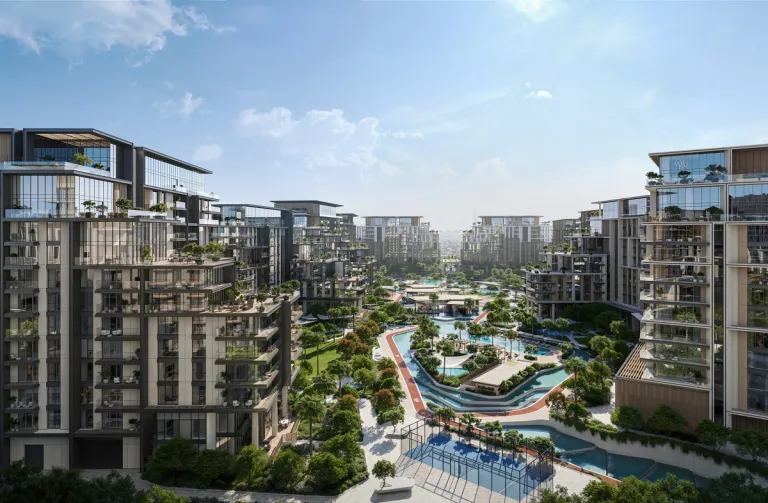
<p>Dubai’s proposition centres on the ability to deliver complete residential environments at a scale that mature cities often struggle to replicate. New communities can integrate landscaped public space, private amenities, wellness facilities, dining, retail, and mobility into a coherent master plan rather than adding them retrospectively.</p>
<p><a href="https://meraas.com/en/latest-post/journal/why-dubai-real-estate-continues-attract-long-term-investors-during-global">Market activity</a> indicates that this model continues to attract international capital. <a href="https://dubailand.gov.ae/en/news-media/dubai-s-real-estate-transactions-surge-31-to-reach-aed-252-billion-in-q1-2026/#/">Dubai Land Department</a> recorded AED252 billion in real estate transactions during the first quarter of 2026, up 31% year on year by value. Luxury property investments reached AED87.71 billion, while foreign investment increased by 26% to AED148.35 billion. <a href="https://www.knightfrank.com/research/article/2026/4/piri-100-ultimate-prime-residential-property-index">Knight Frank</a> also recorded 500 Dubai home sales above US$10 million during 2025, underscoring the emirate’s growing depth within the global prime residential market. </p>
<h3><strong>Accessible Freehold Ownership for International Buyers</strong></h3>
<p>The market’s accessibility is another differentiator. <a href="https://u.ae/en/information-and-services/moving-to-the-uae/expatriates-buying-a-property-in-the-uae">Foreign nationals can purchase freehold properties</a> in Dubai within designated areas, making ownership more direct than in markets with extensive foreign-buyer restrictions. For international investors, this creates a clearer route to asset control, long-term residency planning and portfolio diversification.</p>
<h3><strong>Prime Market Performance Depends on Asset Quality</strong></h3>
<p>Performance remains location- and asset-specific. <a href="https://www.savills.com/blog/article/224518-1/singapore-articles/what-%C2%A32-million-buys-you-in-london-today.aspx">Savills</a> reported that Dubai’s prime capital values rose by more than 5% during the first half of 2025, while prime rents increased by 13.3% in the year to June. Such growth reinforces the need to distinguish well-planned, supply-disciplined communities from projects competing primarily through newness. In this context, master planning, service quality, privacy, waterfront access and long-term community management become as important as price momentum.</p>
<h2><strong>London: Heritage, Education and Institutional Depth</strong></h2>
<p>London attracts buyers through attributes that cannot be reproduced quickly: architectural heritage, established cultural institutions, internationally recognised education and a mature legal and financial ecosystem.</p>
<p>Its current appeal also includes a degree of repricing. <a href="https://www.savills.com/blog/article/224518-1/singapore-articles/what-%C2%A32-million-buys-you-in-london-today.aspx">Savills</a> estimated that prime central London values remained approximately 21.7% below their 2014 peak in September 2025. This creates selective opportunities for buyers who value long holding periods, established neighbourhoods and exposure to a globally recognised market.</p>
<p>However, entry costs can reduce investment efficiency. Non-UK residents usually face a <a href="https://www.gov.uk/stamp-duty-land-tax/residential-property-rates">2% Stamp Duty Land Tax surcharge</a>, while buyers acquiring an additional residential property generally pay a further 5% above standard rates. London may therefore suit buyers prioritising institutional depth and generational capital preservation over lower acquisition friction.</p>
<h2><strong>Singapore: Stability, Governance and Limited Land</strong></h2>
<p>Singapore’s luxury market is shaped by disciplined planning, limited land and regulatory intervention. These characteristics support confidence in urban management and infrastructure quality, while scarcity protects the relevance of well-located prime assets.</p>
<p>The same policies substantially limit accessibility for many overseas purchasers. Foreign individuals currently pay Additional <a href="https://www.iras.gov.sg/quick-links/tax-rates/stamp-duty">Buyer’s Stamp Duty</a> of 60% on residential property, in addition to Buyer’s Stamp Duty, which reaches 6% on the highest portion of a residential purchase.</p>
<p>Singapore consequently appeals most strongly to buyers who place exceptional governance and capital stability above immediate yield or cost efficiency. Its restrictions also mean that foreign demand is more selective and less able to move freely across the residential market, reinforcing its position as a highly controlled, stability-led destination rather than a broadly accessible global ownership market.</p>
<h2><strong>Miami: Waterfront Lifestyle and North American Appeal</strong></h2>
<p>Miami combines waterfront living, a warm climate, and access to the United States with a strong base of Latin American and international demand. Its luxury market has evolved from a second-home destination into a broader wealth-migration and business centre.</p>
<p>South Florida recorded <a href="https://www.miamirealtors.com/2026/01/16/south-florida-real-estate-posts-second-most-10m-up-home-sales-in-history/">361 residential transactions</a> above US$10 million in 2025, its second-highest annual total. International purchasers also accounted for 49% of new construction, pre-construction and conversion sales during the 18 months ending July 2025.</p>
<p>Long-term appreciation has been substantial: Miami-Dade condominium median prices rose by 102% between December 2015 and December 2025, while single-family median prices increased by 144.8%. Yet liquidity differed by property type at the end of 2025, with 6.2 months of single-family supply compared with 13.2 months for existing condominiums. This illustrates why waterfront status alone is insufficient; building quality, location, maintenance obligations, and resale competition remain critical to preserving long-term value in a supply sensitive coastal market.</p>
<h2><strong>What Dubai Offers Global Buyers Today</strong></h2>
<p>London, Singapore and Miami remain important luxury markets, but each reflects a different combination of scarcity, regulation, heritage and lifestyle.</p>
<p>Dubai’s position is built on a comparatively unusual mix: international freehold access, modern housing stock, large-scale master planning, strong luxury transaction activity and hospitality-led residential experiences. Its strongest assets are not simply the newest homes, but communities where design quality, operational discipline, and long-term lifestyle relevance can sustain demand after the initial sales cycle. Discover the top of those <a href="https://meraas.com/en/project-listing">communities by Meraas</a>.</p>
<h2><strong>FAQs</strong></h2>
<h3><strong>Is Dubai Better than London, Singapore, or Miami for Luxury Property?</strong></h3>
<p>No city is universally superior. Dubai may suit buyers prioritising modern space, integrated amenities and foreign ownership access. London offers institutional depth, Singapore provides regulatory stability, and Miami delivers waterfront living with US exposure.</p>
<h3><strong>Can Expatriates Own Property in Dubai?</strong></h3>
<p>Foreign nationals can own property on a freehold basis in designated areas of Dubai. Ownership conditions, registration requirements, and project documentation should be reviewed before acquisition.</p>
<h3><strong>What Should Global Buyers Compare Before Purchasing?</strong></h3>
<p>Buyers should compare total acquisition cost, ownership rights, usable space, service charges, rental demand, future supply, and resale liquidity. Currency exposure and personal residence objectives should also form part of the assessment.</p>
Back to Media