Project Search
No Results Found
Search Results - Blog
Search Results - FAQs
No Results Found
No Result Found
The Journal - 1st September 2026
Central Park at City Walk: How Park-First Planning Is Redefining Apartment Living in Dubai
<img loading="lazy" src="/sites/default/files/2026-10/768x432.jpg" width="768" height="432" alt="Central Park at City Walk: How Park-First Planning Is Redefining Apartment Living in Dubai" />
<p>In Dubai, the value of apartment living is increasingly defined by the environment beyond the home, as well as the design within it. Today’s buyers seek residences that support movement, wellbeing, social connection and everyday convenience without compromising privacy or thoughtful design. This is why park-first planning is becoming increasingly relevant to apartment living in Dubai.</p>
<p>This shift also reflects Dubai’s wider urban planning vision. The <a href="http://dubai2040.ae/en/">Dubai 2040 Urban Master Plan</a> aims to create vibrant, healthy communities, expand parks and open spaces, and improve access to essential facilities. For apartment buyers, green space therefore becomes a functional part of the neighbourhood rather than simply a visual amenity, influencing how residents spend time outdoors and move comfortably through each part of the day.</p>
<h2>What Are the Main Benefits of Living in a Park-Centred Apartment Community in Dubai?</h2>
<p>A park-centred apartment community gives residents direct access to open space within their neighbourhood. This redefines the role of the apartment building. Rather than functioning as a standalone tower with separate leisure facilities, the residence becomes part of a connected landscape where walking, exercise, relaxation and everyday social interaction can occur naturally.</p>
<p>For professionals, the key benefit is a more balanced daily rhythm. A morning walk, evening run or brief outdoor pause between work commitments becomes easier when landscaped green space is close at hand. For families, the benefit is greater flexibility. Children have room to play, parents have nearby places to walk or sit, and weekends need not always depend on driving to a mall, beach or separate public park.</p>
<p>The strongest park-centred communities do more than appear green; they are designed around usable outdoor space. Buyers should assess whether the park provides shaded walking routes, seating, activity zones, children’s play areas, fitness points and clear connections to residential entrances. Greenery delivers the greatest everyday value when it is planned for regular use rather than treated solely as a view.</p>
<h2>How Do Green Spaces, Shaded Walking Routes and Community Amenities Support Wellbeing in Dubai?</h2>
<p>Green spaces support wellbeing by creating a more balanced everyday environment. In a city where many residents move between offices, schools, cars, lifts and indoor destinations, landscaped outdoor areas can make daily routines feel more open and connected. Their value is both practical and restorative: residents can exercise, pause, walk with family or enjoy fresh air without leaving the community.</p>
<p>Shaded walking routes are particularly important in Dubai’s climate. A park may appear attractive on a masterplan, but it becomes part of daily life only when residents can use it comfortably across different times of day and seasons. Buyers should therefore compare pedestrian connectivity, tree cover, sheltered walkways, evening lighting, seating and the distance between homes, amenities and retail destinations.</p>
<p>Community amenities add another layer of convenience when they reflect genuine daily routines. Buyers should assess whether fitness areas, children’s spaces, pools, seating, cafés and essential services are easily accessible from residential buildings rather than dispersed across disconnected parts of the neighbourhood. Thoughtful proximity allows residents to move between exercise, family time, casual dining and social plans without turning each activity into a separate journey.</p>
<h2>What Should Buyers Compare When Choosing Between a Park-Facing Apartment and a Home Elsewhere in a Mixed-Use Neighbourhood?</h2>
<p>A park-facing apartment can offer a more open outlook, greater natural light, a calmer visual setting and a closer connection to nature. However, buyers should evaluate the complete living experience rather than the view alone. A premium outlook creates lasting value when it complements the floor plan, privacy, balcony usability, acoustic comfort and access to the wider community.</p>
<h3>Orientation</h3>
<p>A park-facing home may feel more open, but buyers should confirm whether the principal living areas, bedrooms and balconies benefit from the outlook or whether it is limited to a secondary space. Sun exposure, glazing quality and balcony comfort at different times of day should also inform the decision.</p>
<h3>Privacy</h3>
<p>A lower-floor park-facing apartment may offer a closer connection to greenery and activity, but it can also be more exposed to pedestrian movement. A higher-floor home may provide broader views and greater privacy, although with less immediate connection to the park. Neither option is inherently better. The right choice depends on the buyer’s lifestyle: some prioritise direct outdoor access, while others value elevation, quiet and visual distance.</p>
<h3>Convenience</h3>
<p>Buyers should consider how easily the home connects to cafés, shops, fitness areas, children’s spaces, parking, drop-off points and essential services across the neighbourhood. A park-facing apartment may provide a more desirable outlook, while another residence may offer faster access to daily essentials, quieter surroundings or a more practical route to building entrances and shared amenities.</p>
<h2>How Can Park-First Planning Balance Active Public Spaces with Residents’ Privacy, Security and Quiet Enjoyment?</h2>
<p>A successful park-first community needs energy as well as considered control. Open lawns, fitness areas, cafés and play spaces bring vitality to a neighbourhood. Without careful zoning, however, they can also introduce noise, footfall and evening activity close to residential entrances or private balconies.</p>
<p> </p>
<p>Buyers should examine how clearly the community separates active and quiet zones. Fitness stations, sports lawns and children’s play areas should remain accessible without routinely disrupting residential privacy. Seating areas, landscaped buffers, controlled access points, lighting and legible pedestrian routes can create a more seamless transition between shared spaces and private homes.</p>
<p>Security should feel integrated rather than intrusive. In premium apartment communities, residents expect controlled building access, clearly defined arrival points, well-managed visitor movement and consistently maintained shared areas. The strongest planning allows the park to feel open and sociable while ensuring that homes remain private, calm and professionally managed.</p>
<p>Quiet enjoyment depends on the ability to move effortlessly between openness and retreat. Residents can experience the park’s energy, outdoor amenities and social character before returning to a home that feels private, composed and calm.</p>
<h2>How Does Central Park at City Walk Combine Green Space, Walkability and Premium Apartment Living?</h2>
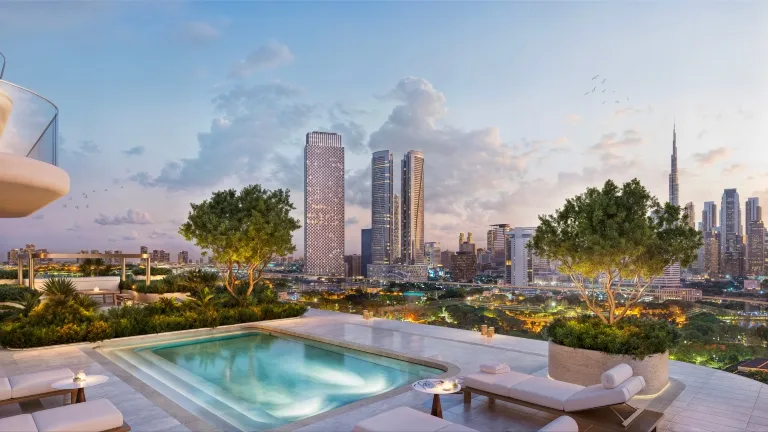
<p><a href="https://meraas.com/en/project/citywalk-central-park">Central Park at City Walk</a> introduces park-first apartment living within one of Dubai’s most recognisable mixed-use destinations. Its residences sit alongside lush landscapes, with green spaces connected to retail, dining, entertainment and hotels. This creates a distinct residential experience compared with conventional high-rise urban living, where outdoor space is often confined to podium amenities or distant public parks.</p>
<p>Its wider setting further strengthens this proposition. <a href="https://meraas.com/en/master-development/city-walk">City Walk</a> brings together places to live, work, dine, shop and socialise within an indoor-outdoor urban environment shaped by international retail, gourmet restaurants, residences and hotels. For residents, the appeal lies in how naturally the destination supports everyday life: a walk through the park, a quick errand, coffee, exercise or family time can all take place close to home.</p>
<p>Central Park at City Walk offers buyers a living experience shaped by green space rather than simply a park view. By placing landscaped surroundings at the centre of daily life, it influences how residents move through the community, access amenities and return to a home that feels connected, calm and considered.</p>
<p>To discover a home shaped by green space, walkability and refined urban living, explore <a href="https://meraas.com/en/project-listing">Meraas communities in Dubai</a>.</p>
<h2>FAQs</h2>
<h3>1.Are park-first apartment communities suitable for residents who work from home?</h3>
<p>Yes, especially when the home is supported by quiet interiors, usable balconies, walkable outdoor areas and nearby cafés or amenities. The advantage is that residents can step away from work without leaving the neighbourhood, whether for a short walk, a coffee, light exercise or a quiet break between meetings. </p>
<h3>2.Can park-first planning support long-term property appeal?</h3>
<p>It can, when the green space is usable, well maintained and connected to daily life rather than treated as a visual feature. Buyers should still compare the fundamentals, including building quality, floor plan efficiency, service charges, access, views, privacy and how well the wider neighbourhood supports everyday routines.</p>
<h3>3.What makes one park-facing apartment more liveable than another?</h3>
<p>A park-facing apartment feels more liveable when the view works with the way the home is used. Buyers should compare the orientation of the living areas, balcony depth, privacy from walking routes, distance from active amenities, natural light, noise levels and ease of access to lifts, parking and shared facilities. The strongest option is not always the closest to the park, but the one that gives residents the best balance of outlook, comfort, privacy and daily convenience.</p>
Back to MediaOther Media
Explore more articles from Meraas