Project Search
No Results Found
Search Results - Blog
Search Results - FAQs
No Results Found
No Result Found
The Journal - 17th September 2026
Age-Inclusive Luxury Homes in Dubai: Essential Design Features for Long-Term Living
<img loading="lazy" src="/sites/default/files/2026-10/768x432_15.jpg" width="768" height="432" alt="Age-Inclusive Luxury Homes in Dubai: Essential Design Features for Long-Term Living" />
<p>Luxury homes are often assessed by their space, views, finishes and location, yet long-term value also depends on how effectively a property supports evolving family needs. In Dubai, where many buyers consider visiting parents, multigenerational living and future legacy use, age-inclusive design can make a premium home comfortable and practical for decades, rather than only at the point of purchase.</p>
<p>Age-inclusive home design considers access, circulation, bathrooms, lighting, flooring and future adaptability so residents and guests can move comfortably, safely and independently as their needs evolve. This approach is particularly relevant to luxury villas, townhouses and premium apartments in Dubai, where generous space can still be difficult to navigate if steps, raised thresholds, narrow routes or poorly positioned bathrooms create daily obstacles.</p>
<h2>What Age-Inclusive Design Features Make a Luxury Home Suitable for Long-Term Living in Dubai?</h2>
<p>A luxury home is suitable for long-term living when ease of movement, privacy and future adaptability are integrated into the layout from the outset. Essential age-inclusive features include step-free access, wider doorways, comfortable corridors, lift access in multi-level homes, ground-floor bedroom options, adaptable bathrooms, slip-resistant flooring, layered lighting and accessible storage.</p>
<p>These design features matter because generous space alone does not guarantee everyday comfort. A luxury villa or townhouse can become difficult for children, parents, guests, visiting relatives or residents recovering from injury to navigate if its main routes include raised thresholds, tight turns, exposed outdoor pathways or bathrooms that cannot be adapted.</p>
<p>The most considered layouts integrate these details discreetly. Flush transitions, well-lit routes, walk-in showers, reinforced bathroom walls, accessible storage and refined slip-resistant finishes can enhance long-term comfort without compromising the home’s luxury aesthetic.</p>
<h2>How Do Step-Free Access, Wider Routes, Lifts and Adaptable Bathrooms Improve Comfort at Every Life Stage?</h2>
<p>Step-free access creates a seamless route between parking, entrances, living areas, bedrooms and outdoor spaces. It supports children, parents carrying bags, guests with luggage, residents recovering from injury, visiting relatives and older family members, while making everyday routines more convenient for everyone.</p>
<p>Wider circulation routes allow residents to move through the home without tight turns, obstructed pathways or restrictive furniture arrangements. This is particularly important at entrances, along corridors, on stair landings, within dressing areas and on the route between bedrooms and bathrooms.</p>
<p>In multi-level luxury homes, a lift can enhance everyday convenience as well as future mobility, assisting with luggage, deliveries, housekeeping, children and temporary injuries. Adaptable bathrooms provide further flexibility, particularly when they incorporate walk-in showers, generous clearance, reinforced walls for future grab rails, accessible storage and effective lighting.</p>
<h2>What Should Buyers Prioritise for Visiting Parents, Multigenerational Living or Future Caregiver Support?</h2>
<p>Buyers should begin by considering bedroom placement. A ground-floor bedroom or guest suite with an adjoining or nearby full bathroom gives the home greater flexibility for visiting parents, older relatives, long-stay guests or anyone who prefers not to rely on stairs.</p>
<p>This approach does not mean designing a home solely around care needs. It means selecting a layout that accommodates everyday family life now while remaining responsive to more specific support requirements in the future. Multigenerational living is more comfortable when family members, guests and caregivers can move through the property without repeatedly crossing private areas.</p>
<p>Valuable features include a guest suite near the entrance, separate family lounges, staff accommodation, discreet service routes and storage positioned close to rooms where support may be required. Arrival should also be effortless, with a shaded drop-off area, direct garage access, a short entrance route and minimal steps, particularly for relatives staying for extended periods in Dubai’s climate.</p>
<h2>Which Flooring, Lighting, Storage and Bathroom Features Improve Safety Without Looking Institutional?</h2>
<p>Safety can be integrated into a luxury home without creating an institutional appearance. Matte flooring, textured stone, slip-resistant porcelain and engineered timber can provide secure footing while retaining a premium finish. These surfaces are especially valuable around entrances, kitchens, bathrooms, terraces and swimming pools.</p>
<p>Lighting should minimise shadows rather than simply increase brightness. A layered scheme is more effective, combining ceiling lights for general visibility, wall lights along corridors, low-level night lighting between bedrooms and bathrooms, and task lighting around mirrors, wardrobes and kitchen worktops.</p>
<p>Storage should be accessible and positioned where it is most frequently used. Entrance storage can reduce clutter near doorways, while bathroom and wardrobe storage should not depend solely on high shelves. In bathrooms, walk-in showers, flush thresholds, handheld shower fittings, recessed shelves, built-in benches and reinforced walls for future grab rails can improve safety while maintaining a refined aesthetic.</p>
<h2>How Can Buyers Assess Whether a Luxury Home Can Be Adapted Without Major Structural Changes?</h2>
<p>Buyers should evaluate the floor plan as a guide to long-term living, rather than only as a sales layout. Key considerations include door widths, corridor turns, stair positioning, lift potential, bathroom dimensions, bedroom distribution and the route from parking to the principal living areas.</p>
<p>Technical drawings are valuable because they reveal what can realistically be altered later. Plumbing stacks, drainage points, electrical routes and structural walls determine whether bathrooms, lighting systems, lifts or smart-home controls can be upgraded without extensive reconstruction.</p>
<p>Outdoor spaces should be evaluated with the same care. Garden access, terrace thresholds, pool edges, shaded seating, exterior lighting and the connection between indoor and outdoor living areas all influence long-term usability. In off-plan luxury homes, these considerations are easier to address at an early stage. In completed properties, a specialist inspection can identify which adaptations are straightforward and which may require structural work.</p>
<h2>How Can Buyers Plan a Luxury Home Around Long-Term Comfort?</h2>
<p>Age-inclusive design enhances everyday family life while providing flexibility for visiting relatives, children, multigenerational stays and future care requirements. It enables a premium home to remain practical as routines evolve, without diminishing its architectural or interior design quality.</p>
<p>For buyers considering luxury homes in Dubai, the priority is to look beyond room count and finishes. A stronger long-term investment is a property that offers seamless arrival, comfortable movement, privacy, safe and adaptable bathrooms, usable outdoor areas and scope for future adaptation with minimal disruption.</p>
<p>Explore <a href="https://meraas.com/en/project-listing">Meraas communities in Dubai</a> to discover luxury homes designed for long-term family comfort, everyday ease and refined living.</p>
<h2>FAQs</h2>
<h3>1.What does age-inclusive design mean in a luxury home?</h3>
<p>Age-inclusive design means planning a home so people at different life stages can use it comfortably. This includes step-free access, wider routes, safer bathrooms, better lighting, reachable storage and layouts that can support children, parents, guests, visiting relatives, older residents and future care needs.</p>
<h3>2.Is age-inclusive design only for older residents?</h3>
<p>No, age-inclusive design supports people across different ages, abilities and routines.</p>
<h3>3.Can an existing luxury home be adapted for long-term living?</h3>
<p>Yes, but it depends on the layout and structure. Buyers should assess door widths, bathroom sizes, stair and lift options, plumbing positions, lighting, outdoor thresholds and the route from parking to the main living spaces before assuming future changes will be simple.</p>
Back to MediaOther Media
Explore more articles from Meraas

Buying Off-Plan Property in Dubai: How Luxury Buyers Should Assess Build Specifications
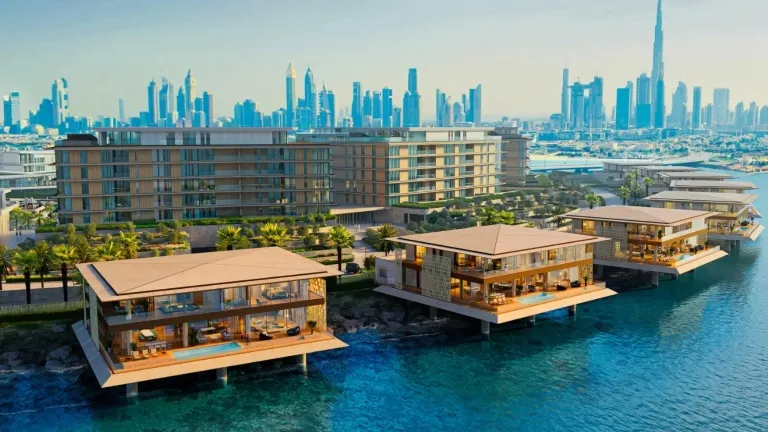
Bulgari Ocean Mansions: How Waterfront Architecture Creates Privacy on Jumeira Bay Island