Project Search
No Results Found
Search Results - Blog
Search Results - FAQs
No Results Found
No Result Found
The Journal - 15th December 2025
Off-Plan or Ready Properties? How to Choose the Right Investment in Dubai
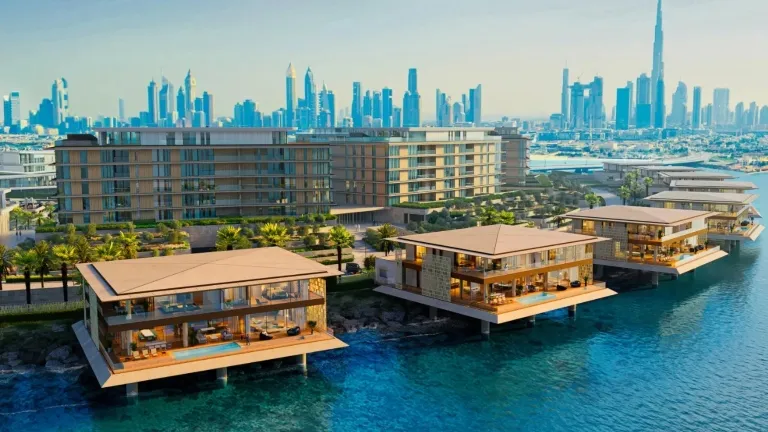
<img loading="lazy" src="/sites/default/files/2026-01/Thumbnail_6.jpg" width="768" height="432" alt="Off-Plan or Ready Properties? How to Choose the Right Investment in Dubai" />
<p>Choosing between off-plan and ready properties is one of the most important decisions investors face in Dubai, particularly when trying to balance capital growth, income generation, and long-term stability. This choice ultimately shapes cash flow visibility, capital deployment, and exposure to development and market cycles. According to the <a href="https://dubailand.gov.ae/media/c5ejvvoe/annual_report_2024_english.pdf">Dubai Land Department (DLD) Annual Report 2024</a>, the market continues to attract a balanced mix of first-time and seasoned investors, reinforcing depth and resilience across both segments. The number of unique investors rose by 40.8% in 2024, driving combined investments of AED 525 billion and a 27.5% year-on-year increase in transaction value. This sustained momentum highlights the importance of selecting the right entry point based on strategy rather than market sentiment alone.</p>
<p>Understanding the difference between off-plan and ready properties is essential for competing effectively in this landscape. This guide outlines the practical, legal, and strategic considerations behind each option.</p>
<h2>Ready Properties</h2>
<p>A ready property is a fully constructed real estate asset available for immediate use or occupation or leasing. It appeals to investors who value clarity, operational readiness, and income generation from day one. It offers the certainty of a finished product, clear pricing benchmarks, and the ability to generate rental income without construction risk.</p>
<h2>How To Get Started with Investments in Ready Properties</h2>
<h3>1. Define Goals and Strategy</h3>
<p>Begin by defining your objectives using SMART goals. A well-defined strategy prevents emotional decision-making and anchors the investment to measurable outcomes.</p>
<h3>1. Market Research</h3>
<p>Analyse the market in detail. Get a clear understanding on location-specific demand, vacancy rates, and historical pricing trends.</p>
<h3>2. Find the Right Property</h3>
<p>● <strong>Location</strong></p>
<p>Prioritise connectivity, transport links, and community infrastructure.</p>
<p>● <strong>Condition</strong></p>
<p>Assess build quality, maintenance standards, and potential refurbishment costs.</p>
<p><strong>● Ownership Structure</strong></p>
<p>Confirm whether the property is freehold or leasehold.</p>
<h2>Legal Regulations for Ready Properties in Dubai </h2>
<p>Purchasing a ready property follows a well-defined legal process governed by the <a href="https://meraas.com/en/latest-post/guide/navigating-legal-requirements-what-you-need-know-when-buying-property-dubai">Dubai Land Department</a>:</p>
<p>● <strong>Financing</strong></p>
<p>Review mortgage eligibility and Loan-to-Value (LTV) ratios, which vary depending on residency status and property value.</p>
<p>● <strong>Costs </strong></p>
<p>Budget for the <a href="https://dubailand.gov.ae/en/">DLD </a>fees (typically 4% of the purchase price), agent commissions, trustee fees, and community service charges.</p>
<p><strong>● Due Diligence</strong></p>
<p>Engage a conveyancer to verify the Title Deed and confirm the absence of liens, disputes, or outstanding liabilities.</p>
<p><strong>● Transaction & Registration</strong></p>
<p>The transaction progresses from signing the Memorandum of Understanding (MOU) to deposit payment, followed by final transfer and registration with the DLD.</p>
<p><strong>● Prepare for Occupancy </strong></p>
<p>Once the ownership is transferred, set up utilities via <a href="https://www.dewa.gov.ae/en/">DEWA</a>, arrange district cooling, and decide on property management, whether self-managed or through a professional agency to handle maintenance and tenant relations.</p>
<h2>Off-Plan Properties</h2>
<p>Off-plan property involves purchasing a home that is under construction or yet to be built, based on architectural plans, specifications, and the developer’s delivery record. This approach prioritises entry price advantage and long-term positioning within future-ready communities. This segment often appeals to investors seeking capital appreciation through early entry pricing and structured payment plans.</p>
<h2>How to Invest in Off-Plan Properties?</h2>
<h3>1. Draft Your Budget</h3>
<p>Break down affordability across the down payment, instalments, registration fees, and associated costs. Ensure income comfortably supports instalments, as initial payments are typically not bank financed.</p>
<h3>2. Consult with a Real Estate Agent</h3>
<p>Engage a qualified specialist who can advise on project potential, estimate future value, and assist in negotiating terms. The specialist should also clearly understand developer performance, project fundamentals, and long-term area potential.</p>
<h3>3. Review Project Credentials.</h3>
<p>Assess the developer’s track record, delivery history, construction quality, and previous community performance.</p>
<h3>4. Choose a Payment Plan </h3>
<p>Select a <a href="https://meraas.com/en/latest-post/guide/understanding-payment-plans-and-financing-options-dubai-real-estate">payment plan</a> that aligns with your cash flow, and scrutinise completion timelines and any potential hidden costs.</p>
<h3>5. Complete the Legal Process</h3>
<p>Sign the reservation form, followed by the Sales and Purchase Agreement (SPA).</p>
<h3>6. Escrow Compliance</h3>
<p>Transfer all payments exclusively to the project’s registered escrow account, verified through official DLD channels.</p>
<h3>7. Pay Brokerage Commission</h3>
<p>Settle agency commission once the transaction is formally secured.</p>
<h3>8. Property Handover</h3>
<p>At completion, conduct a detailed inspection to confirm the property meets agreed specifications before final acceptance.</p>
<h2>Legal Regulations for Off-Plan Properties in Dubai</h2>
<p>Dubai’s off-plan sector operates under a robust regulatory framework designed to safeguard investor capital and promote transparency across development lifecycle:</p>
<h3>● Mandatory Escrow Accounts (Law No. 8 of 2007)</h3>
<p>Developers are required to maintain DLD approved escrow accounts, with funds released strictly in line with construction progress and overseen by RERA.</p>
<h3>● Mandatory Registration (Law No. 13 of 2008 & Law No. 9 of 2009)</h3>
<p>All off-plan sales must be registered on the Interim Real Estate Register (Oqood). Transactions that are not registered are deemed invalid. .</p>
<h3>● Project Launch Regulations (Resolution No. 6 of 2010)</h3>
<p>Sales cannot commence until all approvals are secured and the project is officially registered, preventing unauthorised developments from entering the market.</p>
<h3>● Investor Protection Checks</h3>
<p>Before purchasing, investors should verify the project’s registration, the validity of the escrow account, the completion percentage, and the developer’s permits via the Dubai Land Department or RERA app.</p>
<h2>How to Decide Which Investment is the Right One for You?</h2>
<p>Each type of property has its own benefits. The optimal choice is rarely universal; it is highly individual and strategy driven. The right choice depends on alignment with your objectives, capital structure, and risk profile.</p>
<h3>1. What is your investment goal?</h3>
<p>● For immediate income, ready properties in established communities deliver stable rental yields.</p>
<p>● For capital growth, off-plan investments in emerging master-planned locations often provide attractive upside upon completion.</p>
<h3>2. What is your budget and financing ability?</h3>
<p>Account for the full acquisition cost: down payments, Dubai Land Department fees (4%), and agency fees.</p>
<h3>3. What is your risk tolerance?</h3>
<p>● Off-plan investments involve construction and delivery timelines.</p>
<p>● Ready properties provide immediate clarity and income potential but usually require higher upfront capital.</p>
<h3>4. What is your expected holding period?</h3>
<p>● Short-term strategies often favour ready assets due to liquidity.</p>
<p>● Medium to long-term investors can benefit from by entering during the construction phase and holding through market maturity.</p>
<h3>5. Have you compared the true ROI?</h3>
<p>Analyse net rental yields against service charges and potential capital growth. A premium community with higher service charges may still offer superior ROI due to high tenant demand and asset preservation.</p>
<h2>One Last Tip: Invest in the Right Developer</h2>
<p>Compare net rental yields after service charges against projected capital appreciation. Well-managed premium communities may justify higher service costs through sustained demand and asset longevity.</p>
<h2>Frequently Asked Questions</h2>
<h3>1.Is it safer to buy off-plan or ready property in Dubai?</h3>
<p>Both options are secure due to Dubai’s stringent regulatory framework.</p>
<h3>2.Can I sell my off-plan property before it is completed?</h3>
<p>Developers usually require a certain percentage of the purchase price (often 30-40%) to be paid off before a resale No Objection Certificate (NOC) is granted. Check the specific terms in your Sales and Purchase Agreement (SPA).</p>
<h3>3.What additional costs should I budget for beyond the property price?</h3>
<p>- Dubai Land Department (DLD) registration fee, which is 4% of the property value.</p>
<p>- Trustee office fees</p>
<p>- Real estate agent commissions (usually 2%)</p>
<p>- For ready properties, potential mortgage registration fees and annual service charges.</p>
Back to MediaOther Media
Explore more articles from Meraas


Buying Off-Plan Property in Dubai: How Luxury Buyers Should Assess Build Specifications